The Black Women Steering Big Tech’s Rival Robotaxi Companies
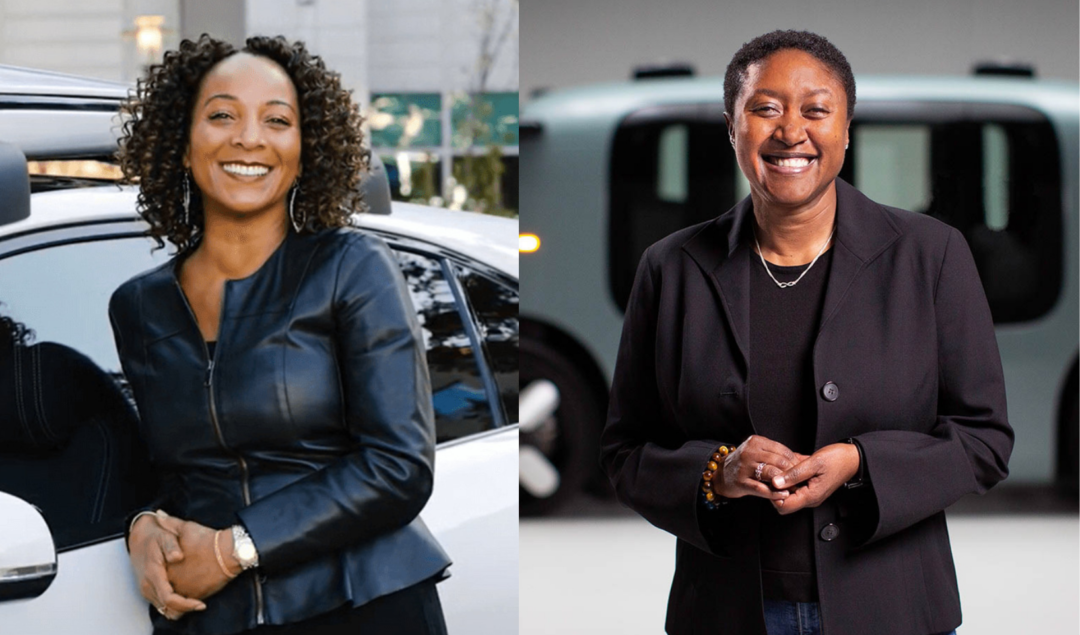
Two Black women are leading rival robotaxi programs that could define the future of autonomous transportation in the US. Aicha Evans, CEO of Amazon subsidiary Zoox, and Tekedra Mawakana, co-CEO of Alphabet subsidiary Waymo, have been named to Forbes’ “Women to Watch in 2026” for their influence in one of tech’s fastest-moving sectors.
Alphabet’s Waymo: Tekedra Mawakana
Tekedra Mawakana, 54, has been co-CEO of Waymo since 2021, overseeing the company’s strategy and the commercial rollout of its autonomous driving technology. Before taking on the top job, she served as Waymo’s COO and previously held leadership roles at eBay, Yahoo, AOL, and Startec, managing teams across five continents.
Born in Mississippi and raised in Georgia, Texas, and Virginia, Mawakana earned a political science degree from Trinity Washington University before completing her law degree at Columbia Law School. She currently serves on the boards of Intuit, Lyte, and Boom Technology.
The company opened up its service to all San Francisco riders in June 2024 and, according to Forbes, now completes around 300,000 paid rides per week across five cities, generating at least $6 million. A leaked letter from Tiger Global Management, reported by CNBC, suggests weekly ride numbers may now exceed 450,000, nearly double what the company shared this spring.
Amazon’s Zoox: Aicha Evans
Aicha Evans, 56, has led Zoox since 2019, steering the self-driving car company through rapid growth and public launch. Born in Senegal and raised in Paris, Evans grew up admiring Marie Curie and dreaming of a future in technology. She told the Financial Times that French universities offered computer science only within broader engineering programs, prompting her to move to the US to specialize. She eventually earned a degree in computer engineering from George Washington University.
Evans spent 12 years rising through the ranks at Intel before being tapped to lead Zoox. Less than a year into the job, she orchestrated the company’s $1.2 billion sale to Amazon, while keeping her seat in the C-suite.
Unlike competitors that retrofit existing vehicles, Zoox designed its robotaxis from scratch with no steering wheel or pedals. Under Evan’s leadership, Zoox launched its first public robotaxi service in Las Vegas in September, offering free rides along the Las Vegas Strip. Last month, the company began offering rides to select users in San Francisco, putting Amazon’s robotaxi service in direct competition with Waymo’s for the first time.
The Robotaxi Rivalry
Waymo is currently leading the US robotaxi market. It already operates a profitable fare-based service across Seattle, Austin, Los Angeles, Atlanta, and Washington, DC, with plans to expand to 12 more cities in 2026, including Dallas, Denver, Houston, Nashville, and San Diego. Some investors believe Waymo’s long-term financial potential could reach into the trillions.
However, Zoox’s public launch is an exciting milestone for the industry, which views purpose-built autonomous vehicles as a potential pathway to safer and more efficient operations. The company’s next challenge will be successfully transitioning from pilot programs to paid commercial operations.
Image credits: Waymo and Zoox