
The Human Cost of AI Infrastructure: How xAI Data Centers Affect Communities
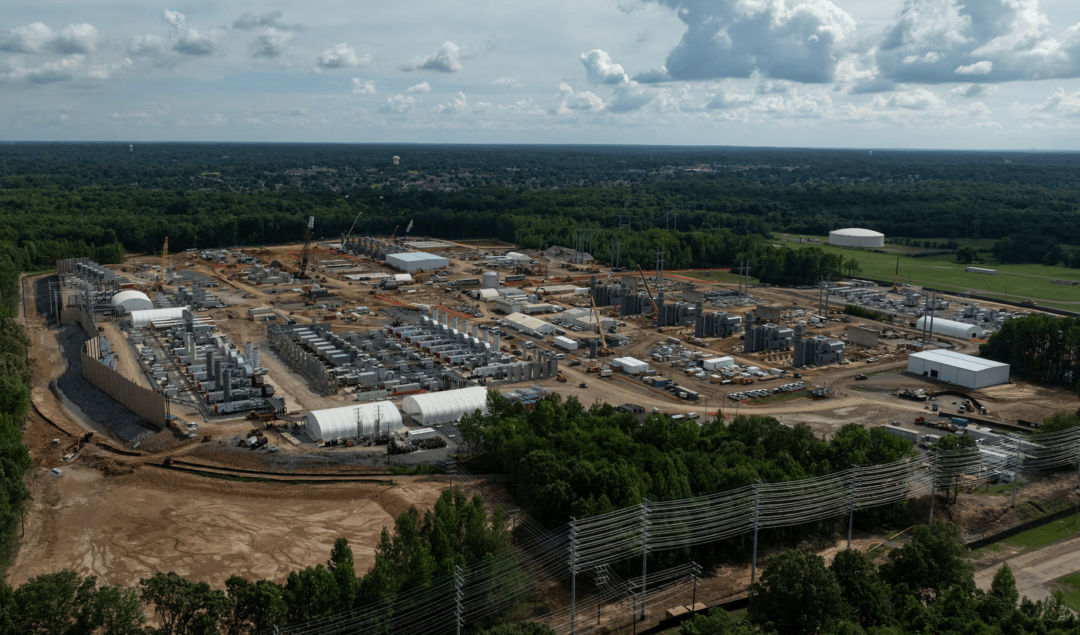
The NAACP recently filed a request for a preliminary injunction to stop air pollution from Elon Musk’s company, xAI, and its parent company, MZX Tech. The lawsuit states that xAI is operating dozens of natural gas turbines at its Mississippi data centre without proper air permits, violating the Clean Air Act, and posing a risk to local communities’ health.
But, how dangerous are these pollutants to local communities, and what are their long-term health risks? POCIT spoke with Glory Dolphin Hammes, the CEO of IQAir North America, who has years of experience in environmental health, business leadership, and global air quality advocacy, about the impact xAI has on local communities.
What is the long-term health impact for people/communities living near xAI data centres?
The long-term health impacts on local communities depend on various factors, such as how a facility is powered, local weather patterns, existing air quality, and how close people live to emission sources. “That’s why it’s difficult to make broad statements about any one facility without reliable monitoring data,” Dolphin Hammes tells POCIT.
But she highlights that long-term exposure to fine particle pollution (PM2.5) and nitrogen dioxide has been associated with increased risks of respiratory disease, cardiovascular disease, adverse pregnancy outcomes, and premature death.
Why can natural gas-powered backup systems and turbines significantly impact local PM2.5 and NOx levels?
Whilst natural gas burns cleaner than some fossil fuels, it is not emission-free. “Gas-powered turbines and generators produce nitrogen oxides, commonly called NOx, along with other pollutants,” Dolphin Hammes says.
“NOx also contributes to the formation of ground-level ozone and secondary fine particle pollution, which can affect air quality beyond the immediate area.”
How is the rapid expansion of AI data centres creating new and often overlooked sources of air pollution?
The rapid expansion of AI infrastructure has created new sources of air pollution that receive less attention than the technology it produces, according to Glory. “Data centres require large amounts of electricity, and in many regions, that demand is met by fossil fuel-based power generation,” she says.
“Some facilities also rely on backup generators or natural gas turbines to maintain uninterrupted operations. Those emissions, along with construction activity and increased freight traffic, can affect local air quality, especially in communities with multiple facilities.”
The intersection of environmental racism and technology development
Dolphin Hammes defines environmental racism as “the disproportionate environmental burdens experienced by many communities of colour because of historic planning and development decisions.”
Throughout history, industrial facilities have often been concentrated near communities that already face greater environmental issues. “AI and data centres can exacerbate environmental racism, as new data centres are not required to address the pollution they might be creating,” Glory says.
“Reliable air quality monitoring allows those conversations to be grounded in data. It helps communities understand changing conditions over time and gives decision-makers the information needed to respond appropriately.”
Image: REUTERS/Kevin Wurm


