Dr Gladys West, Mathematician Who Helped Invent GPS, Dies At 95
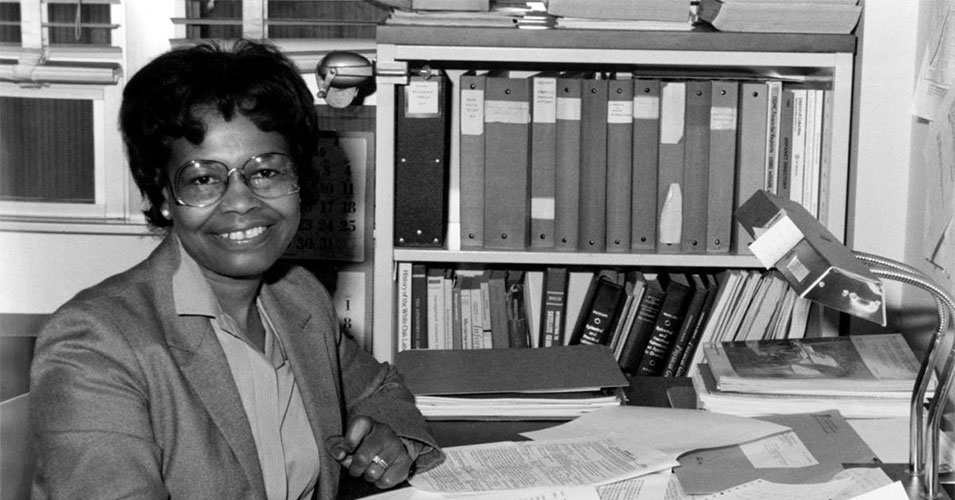
Dr. Gladys West, the mathematician whose work laid the foundation for modern GPS technology, has died at the age of 95. She passed away on January 17, 2026, reportedly surrounded by family at her home in Alexandria, Virginia.
West’s contributions underpin a technology now embedded in global commerce, aviation, emergency response, and everyday navigation, though her role went largely unrecognized until late in her life.
From Virginia Farmland to Federal Research
Born Gladys Mae Brown on October 27, 1930, in Dinwiddie County, Virginia, she grew up on a small family farm in a largely sharecropping community. Determined to chart a different path, she graduated at the top of her high school class and earned a scholarship to Virginia State College (now Virginia State University), where she completed both a bachelor’s and later a master’s degree in mathematics
After a brief period teaching, West joined the US Naval Proving Ground (later the Naval Surface Warfare Center) in Dahlgren, Virginia, in 1956, becoming only the second Black woman hired as a programmer at the base and one of just four Black employees overall. She would remain at Dahlgren for 42 years, retiring in 1998.
The Math Behind GPS
From the 1960s through the 1980s, West worked on complex mathematical models of the Earth’s shape using satellite data, a foundation for turning orbital measurements into precise location information. She programmed early high‑performance computers, including the IBM 7030 “Stretch,” to refine geodetic Earth models that later became a core building block of the Global Positioning System used in phones, cars, aircraft, and critical infrastructure worldwide.
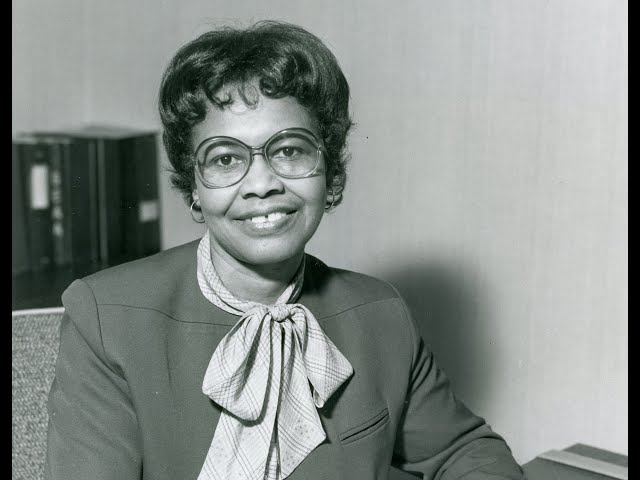
In the late 1970s she served as project manager for Seasat radar altimetry data at Dahlgren, supporting the first satellite designed to remotely sense Earth’s oceans. West also contributed to an early‑1960s study on planetary motion and received formal commendations from the Navy for her technical work.
While advancing technically, West continued her education, earning a master’s degree in public administration from the University of Oklahoma via distance learning. After retiring at 68, she set her sights on a doctorate. A stroke temporarily derailed those plans, affecting her hearing, vision, balance, and mobility, but she persisted, completing her doctorate in 2000 at age 70.
A Hidden Figure
Despite the scale of her impact, West’s contributions remained largely unrecognized for decades, even as her white colleagues were more visibly celebrated. In 2018, a brief biography she submitted for an event hosted by her sorority, Alpha Kappa Alpha, helped spark viral interest in her story and a wave of honors.
She was inducted into the US Air Force Space and Missiles Pioneers Hall of Fame in 2018, named Female Alumna of the Year at the HBCU Awards, listed in the BBC’s 100 Women of 2018, and received the Royal Academy of Engineering’s Prince Philip Medal in 2021. The Virginia Senate also passed a resolution commending her “trailblazing career in mathematics and vital contributions to modern technology.”
West often spoke about working under segregation and Jim Crow, supporting the Civil Rights Movement while being unable to protest publicly as a federal employee. She later noted that white co‑workers frequently received recognition and opportunities she did not, even as her calculations quietly reshaped global navigation.
In a 2020 interview with The Guardian, she admitted that she still preferred paper maps to digital navigation, even her life’s work now underpins the way billions of people move through the world.
Photo by Adrian Cadiz